
How to Plan a Golf Trip to Japan
The first mistake is picking courses before picking the trip. Japan supports two genuinely different vacations that both happen to include golf, and which one you're taking decides almost everything downstream — how many rounds are realistic, whether you need help booking them, how much room is left for food and culture, and whether Tokyo is a home base or a jumping-off point. A golf trip to Japan is built around rounds, with the rest of the itinerary filling the gaps around tee times. A trip to Japan that includes golf treats one round — usually one specific, worth-the-trip round — as a single day inside a bigger, mostly non-golf vacation. Decide which one this is before you look at a tee sheet.
What kind of trip this is
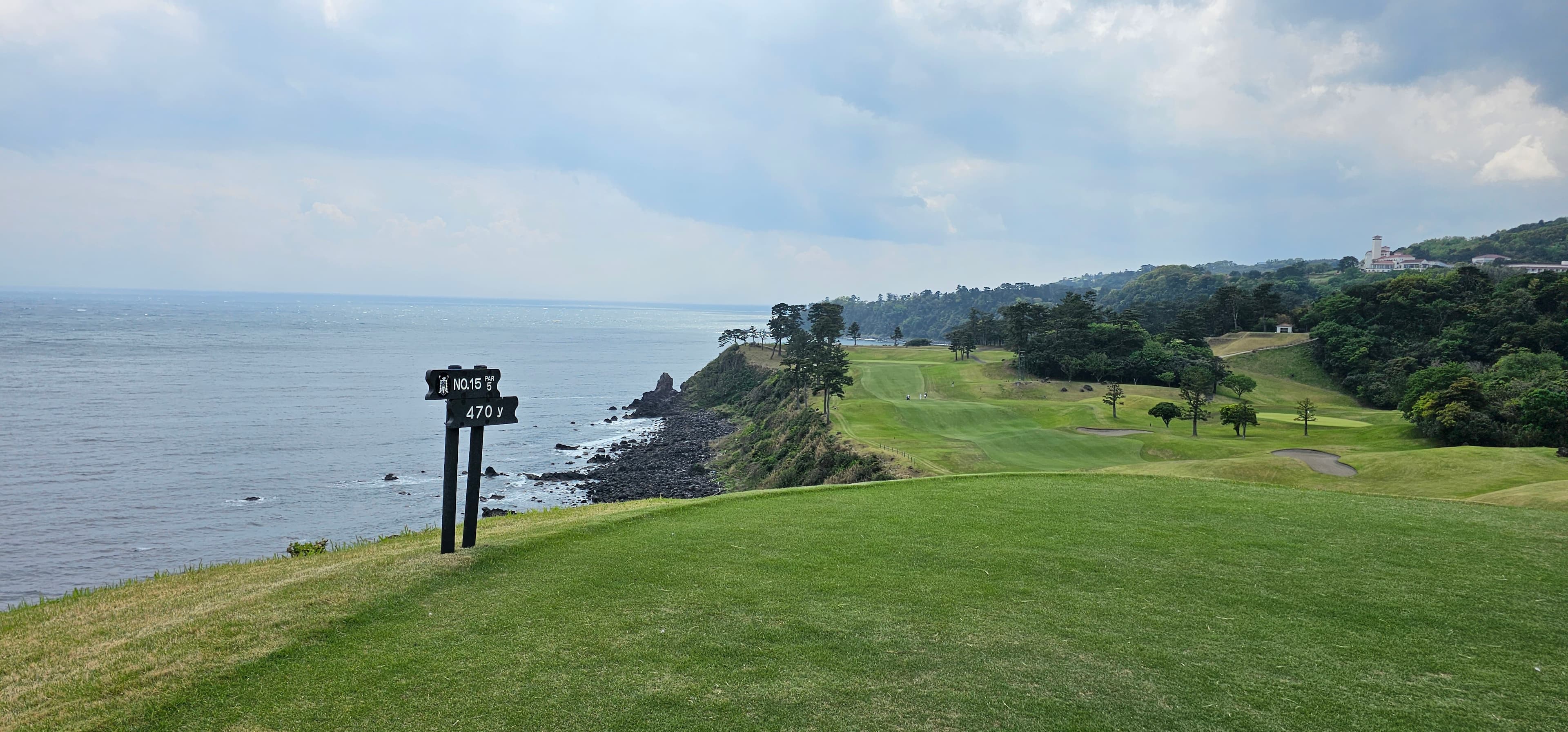
If you want one round and nothing more complicated, the answer is Kawana. The Fuji Course is the one people mean when they talk about golf in Japan — a 1936 Otani/Colt-influenced design draped over the Izu coast with the Pacific on one side and, on a clear day, Mount Fuji on the other. It's guest-only: you can't day-trip it, you book the course and the hotel together, and you walk it with a caddie. That's not a soft preference, it's how the course is run — there's no version of showing up and asking to play. Stay a night at the Kawana Hotel (the 1928 original is worth the stay on its own; the spa and the seafood restaurant aren't afterthoughts) and you also get access to Oshima, the older, gentler sister course next door — self-play, GPS cart, no caddie required, genuinely open to day visitors even if you're not staying over. Both are about 90 minutes to two hours from Tokyo or Kyoto by train and car, which is what makes the one-round version of this trip so clean: fly in, get to Kawana, play, fly out, and you've done it properly.
If you want a few rounds without building a full bespoke tour, add Narashino and PGM Maria Golf Links to Kawana Fuji. Narashino, out in Chiba, is the course that's hosted the ZOZO Championship — the only PGA Tour event in Japan — five times, including Tiger Woods' 82nd career win in 2019. It's an Accordia-operated club with genuine online booking in English, not a members' favor. PGM Maria, also in Chiba and about 30 minutes from Narita, is a Pete Dye links design — a different look than almost anything else in the country — and bookable directly or through a Japan golf specialist a few days out. Neither requires an introduction. This tier is where most golf-primary trips should actually live: three real, different courses, all within reach of Narita, none of them gatekept.
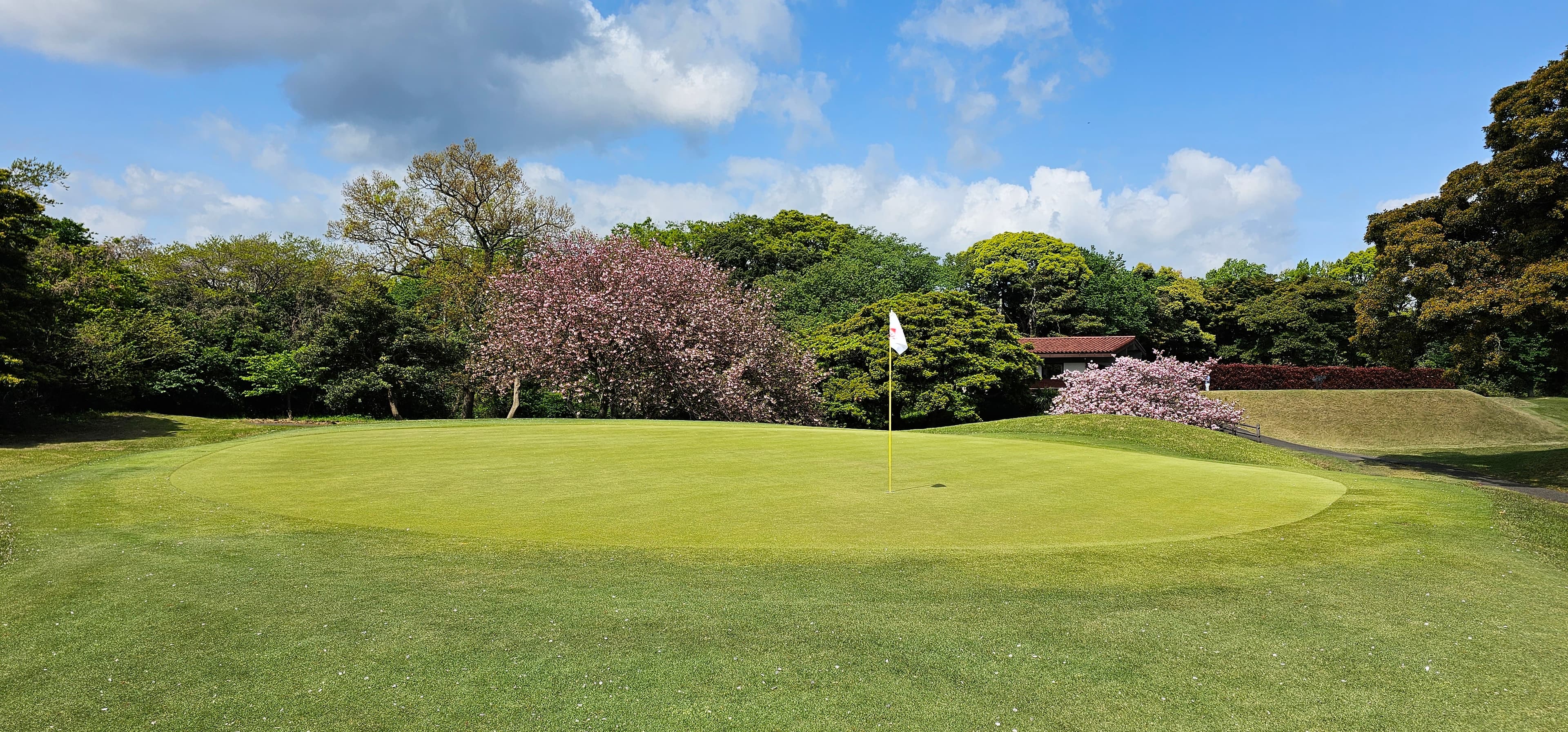
If you're building a bespoke golf tour with an agent, that's where The Royal, Narusawa, and possibly Yokohama Country Club come in — and it's worth being precise about why you need the agent, because it's not always what it looks like. Yokohama Country Club is genuinely private; outside play needs a member or a specialist introduction, full stop. The Royal and Narusawa are different: both are technically visitor-bookable through mainstream Japanese platforms (Rakuten GORA, GDO), not invitation-only. What actually keeps them out of reach for most foreign visitors is the platform and the language, not the membership rolls — an agent's real value at this tier is fluency and access to the right booking system, not smuggling you past a closed door. Narusawa in particular is worth it anyway: walking-only, caddie mandatory, jacket required in the clubhouse, set at the foot of Mount Fuji, and about as close as you'll get to how a serious Japanese golfer actually experiences the game.
Where in Japan
Staying in Tokyo keeps this simple. Kawana, Narashino, and PGM Maria are all reachable as day trips or single-night detours without rebuilding your itinerary around golf. Add Kyoto or Osaka and the golf gets more selective — Kawana is still workable via the Tokaido corridor, but you're not casually adding a second round on a Kyoto-based day the way you can from Tokyo, so plan your golf days around your Tokyo leg specifically. Go wider than that — Hokkaido, Kyushu, anywhere off the Tokyo–Kansai spine — and golf becomes its own logistics project independent of the sightseeing trip, worth doing only if golf is genuinely the point of that leg.
Other must-dos
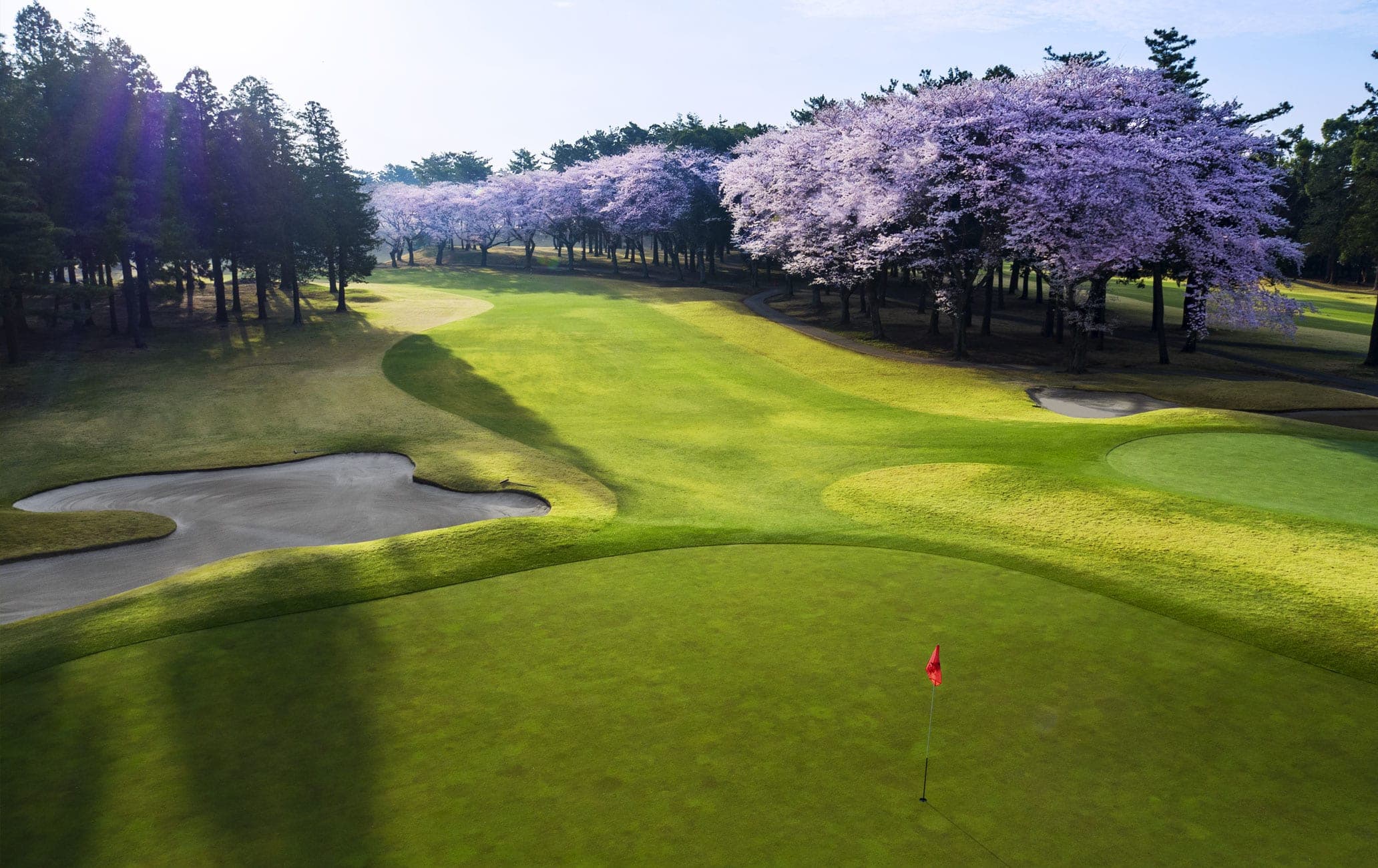
The non-golf plans should shape the golf plan, not compete with it. Cherry blossom season (roughly late March into early April) is also prime golf season, so a trip built around blossoms needs its rounds booked earlier than you'd think — good tee times and good hanami spots get claimed by the same calendar. A food tour or a day given to sumo works cleanly on a non-golf day in Tokyo, no real conflict there. A distillery visit is worth routing deliberately: Suntory's Hakushu distillery sits in Yamanashi, close enough to Narusawa that a serious golf-and-whisky day in the shadow of Fuji is a genuinely good idea rather than a stretch.
Yamato Transport: sending your clubs ahead
Yamato's Golf TA-Q-BIN service is the single best logistics tip for a Japan golf trip and it's barely used by foreign visitors, mostly because they don't know it exists. Drop your clubs at your hotel or airport counter two days before you play, and Yamato delivers them straight to the golf course — they're waiting at the reception desk when you arrive. Current pricing runs around ¥3,020 (roughly $20) one-way within the same region, insured up to ¥300,000, with a discounted round-trip option that sends your bag back to your hotel or the airport when you're done. That's what actually makes a multi-course, multi-city Japan trip sane: you're never hauling a golf bag through a train station or a Tokyo hotel lobby. Build it into your itinerary as a default, not a nice-to-have.
Caddies and the walking round
Caddie requirements vary by course, not by some universal Japanese golf rule — Kawana Fuji and Narusawa require them and require walking; Oshima and plenty of everyday Japanese courses are self-play with a cart. Where a caddie is required, expect them to read greens, manage pace, and run the group with real authority — say up front if you're a beginner or unfamiliar with the format, and the round goes more smoothly for everyone behind you.
The turn
Budget real time for lunch. At traditional Japanese clubs, the break between the front and back nine isn't a hot dog at a snack shack — it's a genuine sit-down meal, often 45 minutes to an hour, sometimes longer on a busy day. It's one of the best parts of playing golf in Japan and also the reason a round here takes noticeably longer, start to finish, than the same 18 holes would at home. Don't schedule anything tight immediately after a round, and don't assume you can fit two rounds into a single day the way you might in the U.S. — between the caddie pace, the walking, and the lunch, one full, unhurried round is a full day.
Common planning mistakes
Booking Kawana Fuji as a day trip is the first one — it isn't possible, and finding that out after you've built an itinerary around it is a bad way to lose a day. Assuming The Royal or Narusawa are closed to outsiders and paying an agent purely for "access" is the second — you're really paying for the Japanese-language booking platform and the local fluency, which is worth it, but know what you're buying. Skipping Yamato and carrying your own clubs through Tokyo is the third — it's cheap, it's reliable, and there's no good reason to do it the hard way. And treating a Japanese golf day like an American one — stacking 36 holes, or booking something right after the round — is the fourth: the caddie pace and the lunch at the turn make a single round a full day here, and the trip goes better when the itinerary respects that instead of fighting it.
For the broader planning framework this guide builds on, see how to plan a golf trip, and for what to pack, see our golf trip packing list.