

The $400 Round That Costs $700
Every golf trip captain has had the experience of presenting a budget that seemed reasonable, collecting money upfront, and then watching the actual costs come in 30 to 40 percent higher than projected. The green fees were accurate. The lodging was accounted for. What nobody budgeted for was everything in between: the caddies, the drinks at the turn, the dinner that went long, the pro shop purchase that seemed reasonable in the moment, and the Uber from the airport that was $65 each way.
Golf trips are expensive. The honest ones acknowledge that upfront. The ones that go sideways are usually the ones where the captain shared green fees and lodging and called it a budget.
Where the Money Actually Goes
Green fees and lodging are the obvious line items and usually the most accurate projections. If Bandon is quoting $375 per round and the cottage is $280 per person per night, those numbers are real. What's less real is the assumption that the trip ends there.
Caddies add $100 to $150 per round at destinations that use them, including tip. At Bandon Dunes or Whistling Straits, caddies are part of the experience and worth every dollar. But they're also a line item that shows up in the final accounting when groups didn't include them in the original number.
Food and drinks are the most underestimated category on nearly every trip. Budget $80 to $120 per person per day for meals, drinks at the turn, and evening beverages, and you'll be in the right range at most destinations. At resort towns like Kiawah Island or Pebble Beach, assume the higher end. Groups that budget $30 per person per day on food end up eating bad meals and resenting it.
Travel is more variable than most captains model. Direct flights to regional airports cost more than connecting through a hub. Rental cars at remote golf destinations often mean premium SUVs because nothing else is available. Gas and tolls add up across multiple driving days. Budget travel is a different skill than budget golf.
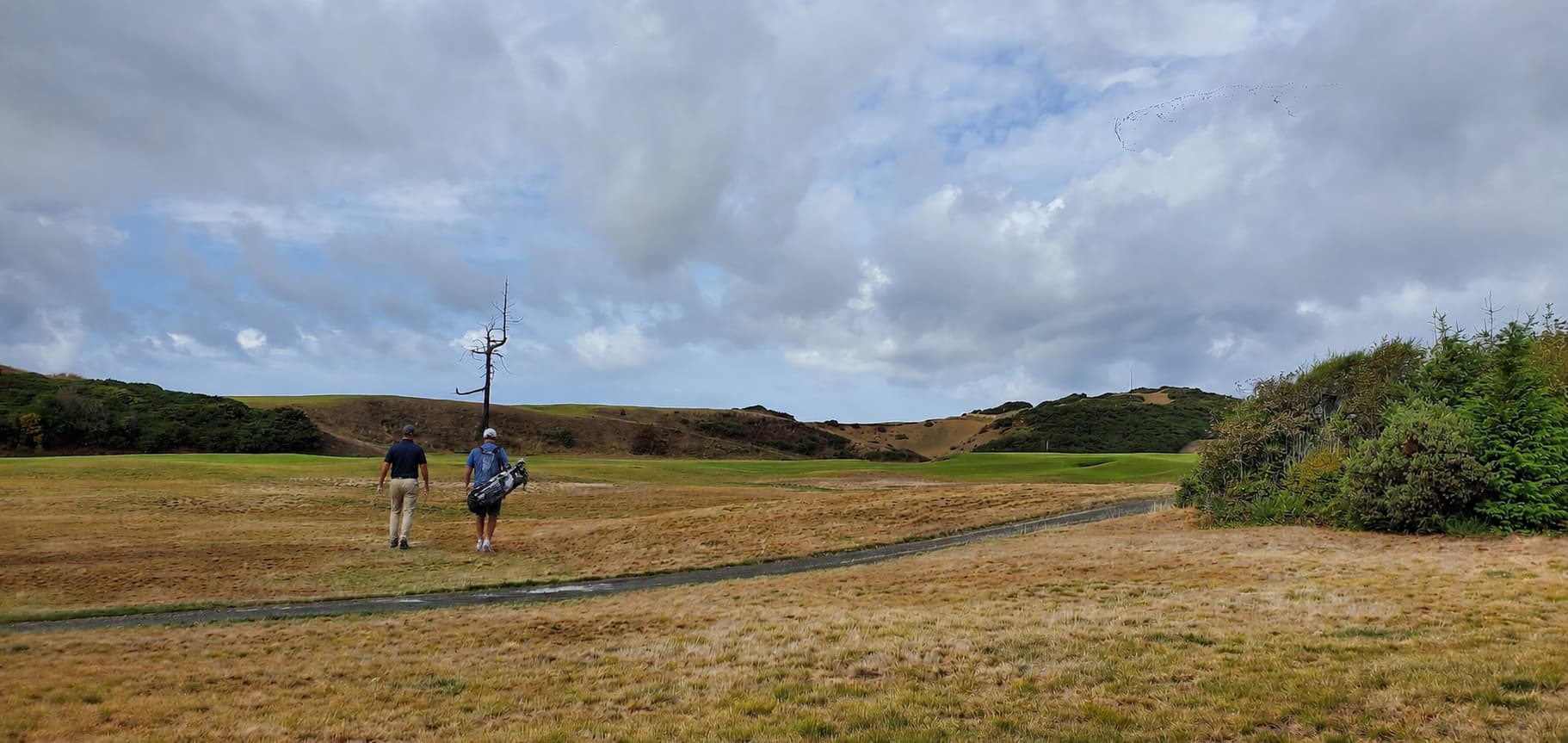
The pro shop is a real budget leak at every major resort. Nobody intends to spend $200 at the Pinehurst pro shop. Everyone does. A logo hat, a sweater because it got cold, a ball marker that seemed like a good memento: these are $50 to $75 purchases that accumulate across the group. Build it into the per-person number or accept that it's happening off the books.
Tips are another line item that surprises people. Caddies, shuttle drivers, bag drop staff, housekeeping at multi-day stays, and the bartender who kept the tab running all deserve recognition. Budget $50 to $100 per person per trip for tips and you'll be in the right range.
The contingency fund is what separates a well-planned captain from an optimistic one. Equipment breaks. Flights delay. Someone gets sick on day one and can't play the round that was already paid for. Building 10 to 15 percent contingency into the per-person cost isn't pessimism. It's math.
How to Set Expectations
The most useful thing a captain can do is present a fully-loaded per-person cost before collecting deposits: green fees, lodging, travel, estimated food and drink, caddies if applicable, and a round number for incidentals. Then hold that number. Groups that get a $1,200 estimate and a $1,800 final invoice don't complain about the money as much as they complain about the surprise.
The second most useful thing is to decide, before the trip, what's communal and what's individual. Some captains put food and drink on a shared tab and split it evenly at the end. Others keep those costs individual. Neither approach is wrong, but choosing in advance prevents the conversation on the last night where nobody can agree on who had what.
The Destinations Worth the Premium
Not every golf trip needs to be expensive to be good. New Mexico, Eastern Nebraska, Roscommon, and North Dakota all deliver legitimate golf at a fraction of the cost of the marquee destinations. If the group's ceiling is $1,200 per person all-in, these are serious options, not consolation prizes.
But when the group is ready to spend, the premium destinations justify their price points. Pinehurst Resort, Bandon Dunes, and Sand Valley all deliver a depth of experience that holds up against the cost. The mistake is not spending the money. The mistake is spending it without understanding what the full number actually is.