

The Difference Between a Great Trip and a Great Destination
There are golf trips and there are golf destinations. A trip is something you plan once, cross off, and reference in future conversations as a benchmark. A destination is somewhere you go back to. The distinction matters more than most groups realize when they're deep in planning mode, because the calculus of whether a place earns a repeat visit is not about whether the courses are good. It's about whether they change.
Most great golf is a one-time experience. You play the course, you check it off, and you spend the rest of your life referencing it. That's not a destination. That's a pilgrimage. What separates the replayable trips from everything else is a combination of course volume, variable conditions, and a culture that makes the non-golf hours worth repeating.
Here's what actually earns a repeat visit, and which destinations belong on your calendar indefinitely.
What Makes a Trip Replayable
Three things. First, enough course options that you're not replaying the same 36 holes in the same order. If a destination has two courses, it might be worth one trip. Three excellent courses starts to get interesting. Five or more, and you have the architecture of a proper annual.
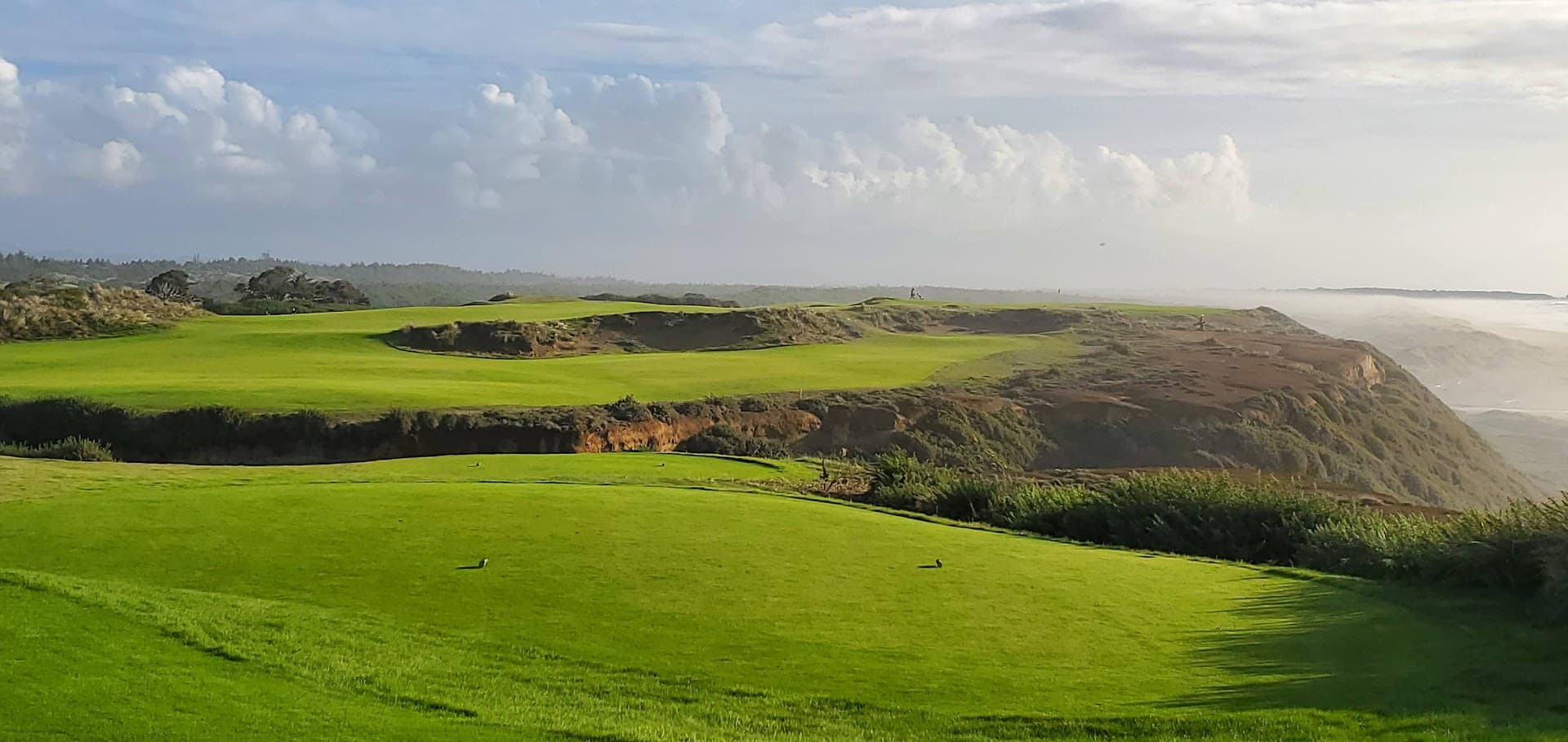
Second, conditions have to be variable enough that the same course is a different exam each visit. This is why coastal destinations overperform: wind, firmness, and weather mean that Pacific Dunes in October is a fundamentally different test than Pacific Dunes in July. Static courses in static conditions are great once. Courses that fight back differently depending on the day earn the return.
Third, the culture around the golf has to hold up. Lodging that feels right, food that doesn't punish you for being there, and enough off-course texture to decompress between rounds. Groups that go somewhere solely for the golf often find that by day three, the golf is the only thing holding the trip together. The best replayable destinations carry the whole trip, not just the rounds.
Bandon Dunes
Bandon Dunes is the obvious answer and it's not close. Five full courses plus the Preserve means that a four-day trip built around 36 holes per day still doesn't touch everything. The coastal conditions change daily, which means the same tee shot you executed confidently last October may be a completely different problem this September. Caddies remember regulars. The culture deepens with each visit. There is no golf destination in North America more worth repeating, and groups that go once almost always come back within two years.
Sand Valley
Sand Valley has earned this list faster than any destination in recent memory. Three world-class courses: Sand Valley, Mammoth Dunes, and Sandbox. Each rewards a different kind of game. The sandy waste areas and inland movement create conditions that shift with rainfall and prevailing winds in ways that keep the courses honest across visits. It's the best argument for a Midwest annual, and the argument only gets stronger as the property matures.
Pinehurst Area
The Pinehurst Area is the most replayable region on the East Coast. Pinehurst No. 2 alone justifies repeated trips, but the surrounding Sandhills offer enough variety that you can stack days without replaying anything. Dormie Club, Tobacco Road, Mid Pines, Pine Needles, and a half-dozen more options within range mean this is a region, not a resort, and the best way to experience it is to treat it like one.

Streamsong
Streamsong is the most underrated name on this list. Three courses in central Florida that have no business being as good as they are: Red, Blue, and Black. Each plays differently from the others. The property is remote enough that guests fully commit to the golf once they arrive, which creates a focused trip culture that holds up over multiple visits. Groups that discover it once tend to return, often the following year.
Bend, Oregon
Bend, Oregon sits at the intersection of landscape and course quality in a way that rewards the golfer who comes back. Tetherow, Pronghorn, and the surrounding high desert offer different challenges, and the town has enough going on that non-golf hours don't collapse. Access from major West Coast airports is manageable. It's not as obvious a repeat as Bandon, but groups that have been twice understand immediately why it belongs here.
What Kills Replayability
The single-destination resort with one signature course and two supporting acts is the most common trap. You go, you play the main course twice, the supporting courses once each, and you've seen everything there is to see. Some of these trips are excellent. Very few are worth repeating.
High cost per round also erodes replayability faster than most groups expect. A $500 green fee is easier to justify once than twice. Destinations that deliver at a price point where you don't feel the math every time you tee it up are the ones that show up on the calendar annually.

The Short List
If you're building a rotation worth repeating, five destinations belong on it: Bandon Dunes, Sand Valley, the Pinehurst Area, Streamsong, and Bend, Oregon. They have enough course volume to accommodate multiple visits without repetition, conditions variable enough to keep the experience honest, and the off-course infrastructure to carry a full trip. Everything else is worth visiting. These are worth going back to.