

The Argument That Never Gets Resolved
Every golf trip captain eventually reaches the point where the question of club shipping turns into a recurring debate with no clean answer. Some players ship every time because the convenience is worth whatever it costs. Some drag their bag through three airports because they don't trust shipping companies with equipment they've spent years building. And somewhere in between is the actual right answer, which depends on the specific trip, the specific player, and what they're actually optimizing for.
The mistake is treating this as a universal question. It isn't. The answer changes based on the flight, the destination, the player's bag setup, and whether the trip has any margin for error in the equipment department.
The Real Cost of Flying With Clubs
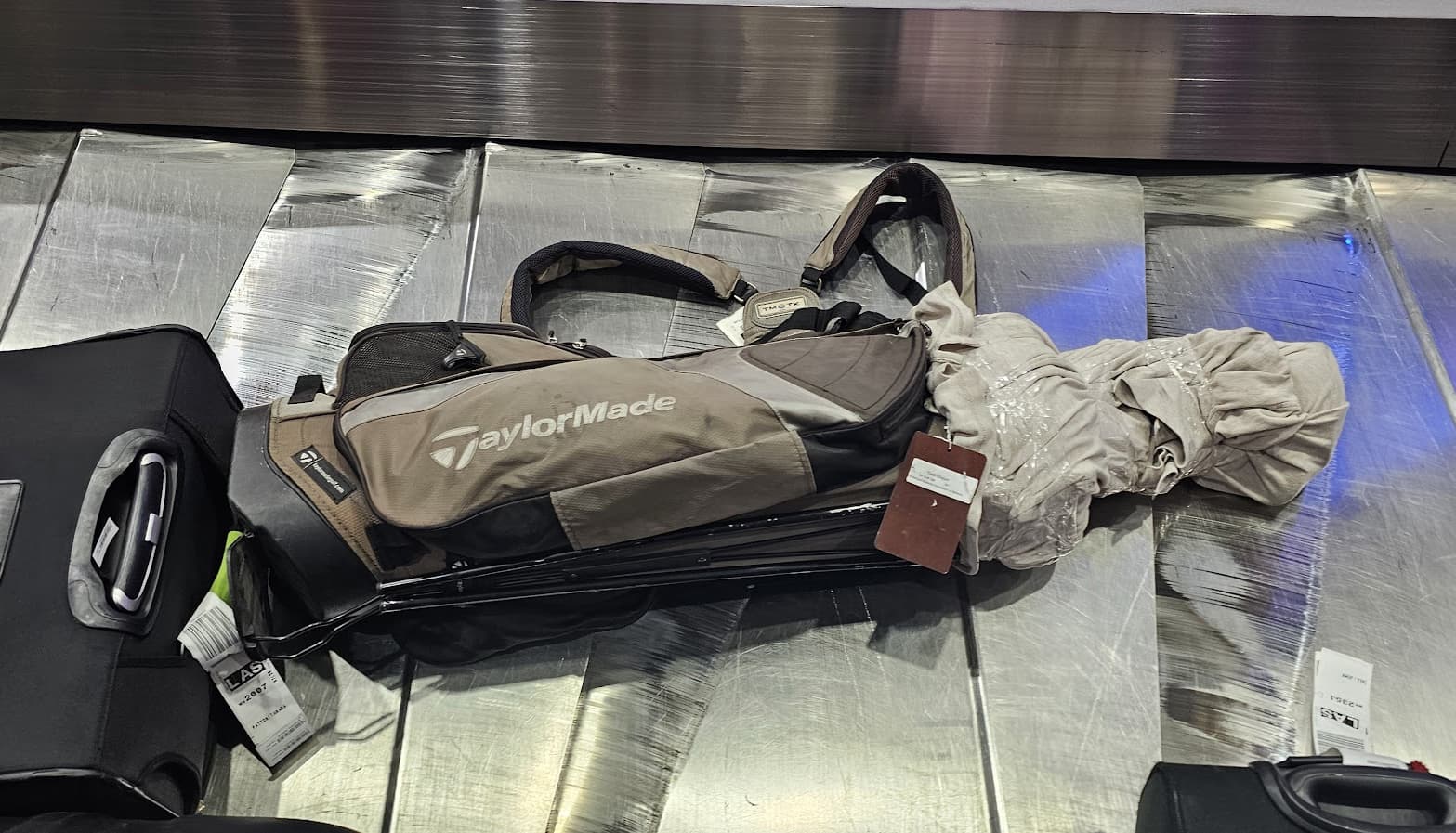
The airline bag fee is the number most people quote, and it's not the whole story. Checked bag fees run $35 to $75 each way on most domestic airlines, meaning $70 to $150 round trip. Before you add the cost of a hard case that actually protects the clubs in the hold.
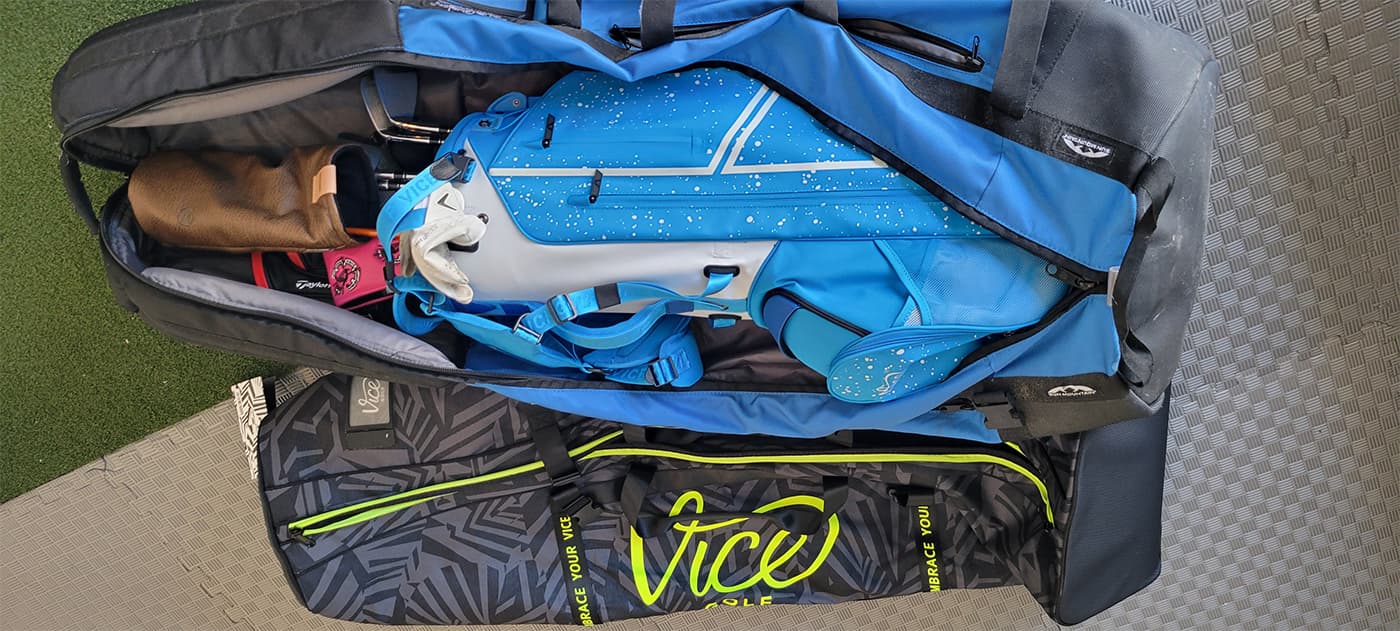
A quality travel bag runs $200 to $600. It adds weight, which matters if you're already near the oversize or overweight threshold. It takes up space in the rental car. It requires storage at the resort. It also requires you to be at the bag claim carousel waiting, rather than walking straight to the shuttle with a carry-on.
None of this makes flying with clubs the wrong choice. It's just the honest accounting of what you're actually paying.
The Real Cost of Shipping
Ship Sticks charges roughly $40 to $80 each way for standard domestic shipping, depending on route and lead time. That's $80 to $160 round trip per bag, often more expensive than airline bag fees. What you're buying is door-to-door service: clubs at the destination when you arrive, picked up from the resort when you leave.
The value of arriving at Bandon Dunes or Sand Valley with nothing to carry except a carry-on is real. Airport friction is eliminated. The rental car is simpler. The arrival experience is better. For a four-day trip to a remote destination, this is worth paying for. The question is whether the specific trip justifies the premium.
When Shipping Makes Sense
Ship the clubs when the travel involves connections, when the airline's track record on the route is questionable, or when arriving without clubs would ruin the first round. Bandon Dunes is the clearest case: the flight to North Bend is a small regional route with limited cargo capacity, and the risk of a bag misroute is high enough that arriving clubless the night before a 8am tee time on Pacific Dunes is a real scenario. Ship the clubs. Arrive light. The premium is worth it.
Ship when the trip is five or more days and the volume of gear (rain gear, multiple pairs of shoes, extra layers for variable conditions) makes a travel bag heavy and awkward. Ship when the group is large enough that eight bags at claim turns the airport exit into a logistics operation.
When Flying With Clubs Makes Sense
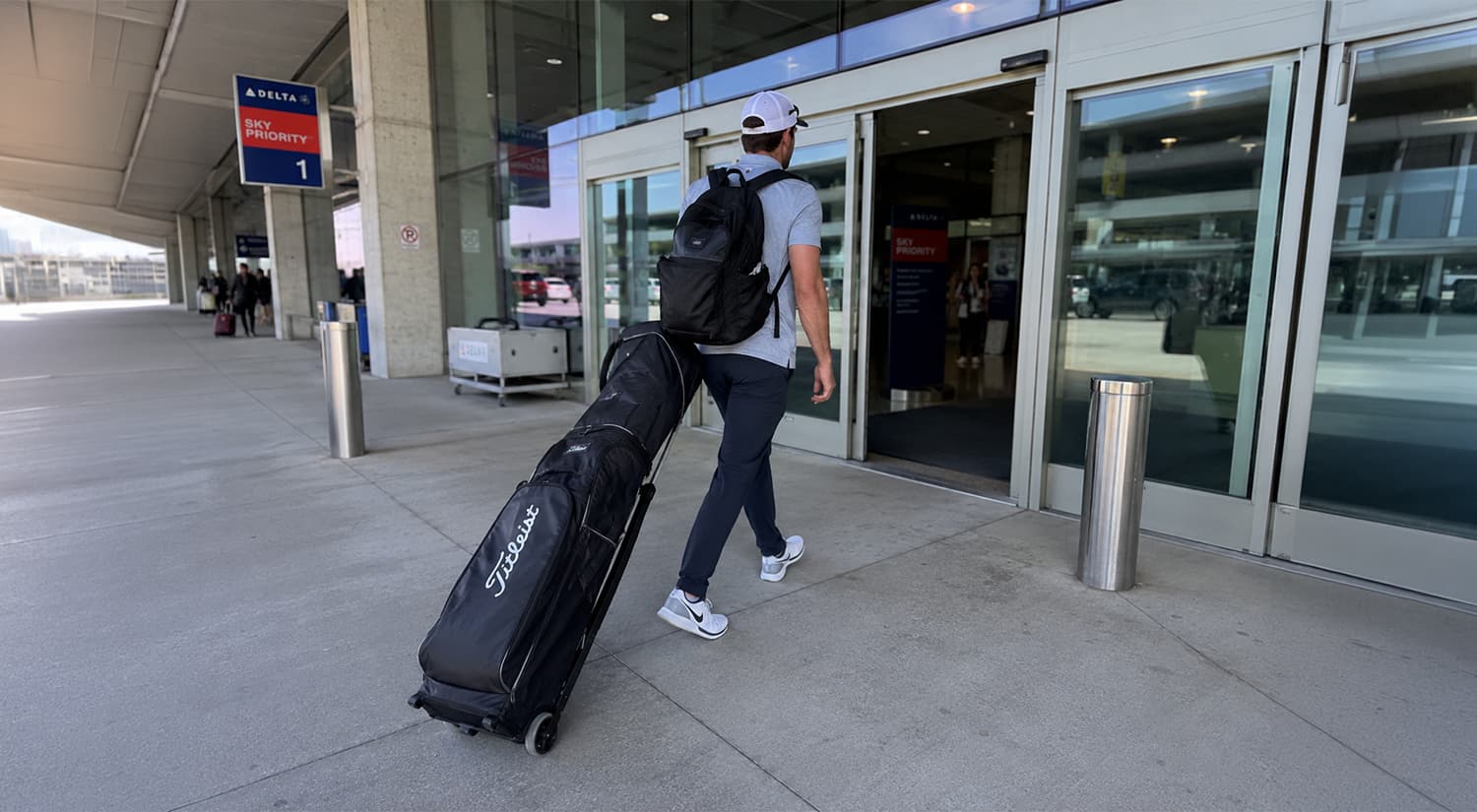
Fly with them when the route is direct and reliable, when the airline has a good track record for checked bags at that airport, and when the cost comparison is genuinely close. A direct flight from Atlanta to a Pinehurst-area airport is a different risk profile than two connections through regional airports. Know the difference.
Fly with the clubs when the destination is a drive, because the question becomes moot. Players driving to Arcadia Bluffs from Chicago or Streamsong from Tampa are loading bags into cars, and the ship-vs-fly debate is irrelevant.
The Case for Rental Clubs
The case nobody wants to make, but that deserves an honest mention: at some destinations, rental clubs are good enough that shipping your own is a rounding error in the total trip cost.
Pebble Beach and Pinehurst Resort both offer rental clubs from major manufacturers. For a player who travels infrequently, makes the trip once, and is not dialed into a specific setup, renting $75 to $150 of current-model equipment is a more rational decision than shipping their own clubs and paying $160 round-trip for the privilege.
This is not the recommendation for the serious golfer with a setup they've spent three years tuning. It is the recommendation for the group member who plays twice a month, travels once a year, and would rather not manage the logistics.
The Captain's Framework
The captain managing the group's travel should set the expectation before each player makes their own decision: here is what the group is doing and why. Groups where half the players ship and half fly create a fragmented arrival experience. If the itinerary includes golf on arrival day, shipping should be the default for the whole group. If there's no golf until the following morning, individual preference is fine.
Make the call and communicate it clearly. That's the actual job here.