
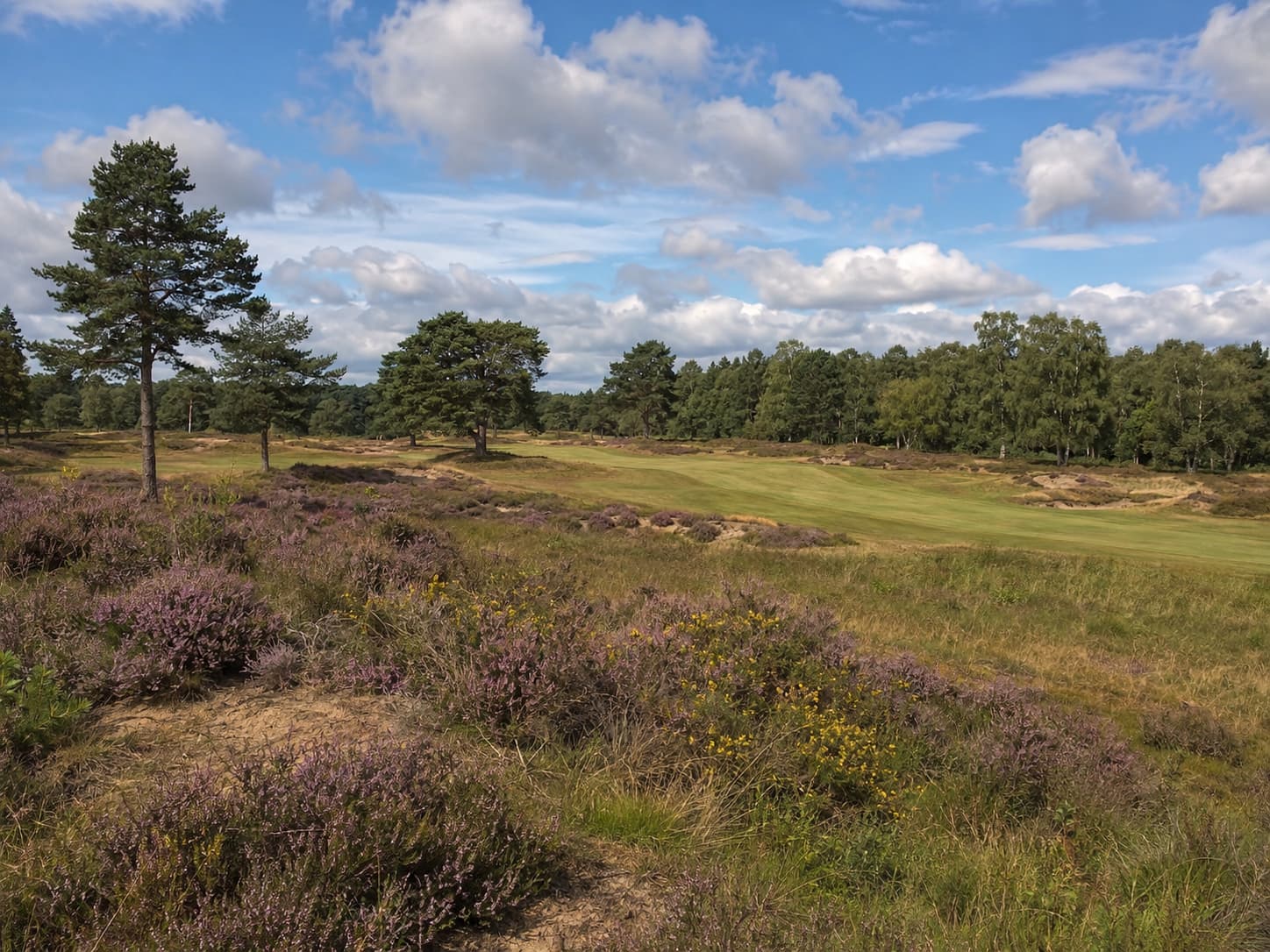
The Heathland Condition
British heathland golf, Woodhall Spa, Sunningdale, Walton Heath, Swinley Forest, is defined by specific conditions: sandy, acidic soil, heather, gorse, and silver birch framing corridors that create strategic options rather than forcing a single line of play. American golf has almost never had those conditions natively. The sandy soils of the Mid-Atlantic coast, the lake country of Wisconsin, and a few scattered sites in the Mountain West come close. A small number of American courses have deliberately pursued the aesthetic and gotten it right.
Finding genuine heathland golf in America without flying across the Atlantic requires knowing which courses made the effort.
Gamble Sands, Washington. David McLay Kidd's 2014 layout in Brewster, Washington sits in the Columbia River Gorge on terrain that genuinely approximates heathland conditions: sandy soil, native scrub, and wind. The routing is wide, the green complexes are complex without being theatrical, and the course's vibe rating of 10.0 reflects a property that has figured out what it wants to be. This is the most accessible American heathland experience outside the Sandhills, and it is not talked about nearly enough.
Sand Valley, Wisconsin. The glacially carved sand country of Adams County is the closest analog to true heathland terrain in the American Midwest. David McLay Kidd's Mammoth Dunes uses wide fairways and exposure that read as heathland routing. Tom Doak's Sand Valley course is more closely aligned with the strategic, less visually theatrical tradition of the best British heathland layouts. Playing both on the same day is the clearest demonstration of how the same landscape supports two different design philosophies.
Western Nebraska. The prairie sandbelt of eastern Colorado and western Nebraska shares the open, windswept character of heathland golf without the specific plant palette. The grasses are different but the strategic logic, exposed tees, wind-dependent club selection, ground game rewarded, is the same. Wild Horse in Gothenburg is the most accessible entry point.
Pinehurst Resort and the Sandhills. The Carolina Sandhills are the most heathland-like terrain in the American South. Sandy soil, wiregrass, and longleaf pine produce playing conditions that American travel writers have been comparing to Surrey and Berkshire for 120 years. The comparison is not precise but it is not wrong either.
Why It Matters
Heathland golf rewards a different game than parkland or coastal golf. The bump-and-run approach, the wind adjustment, the ability to take a line that no caddie would recommend and make it work: these are skills that courses in the heathland tradition develop. American golfers who have only played target golf are missing a vocabulary that British and Irish courses take for granted.
The courses listed here are not consolation prizes for golfers who cannot get to Sunningdale. They are correct in their own terms. Go play them.